
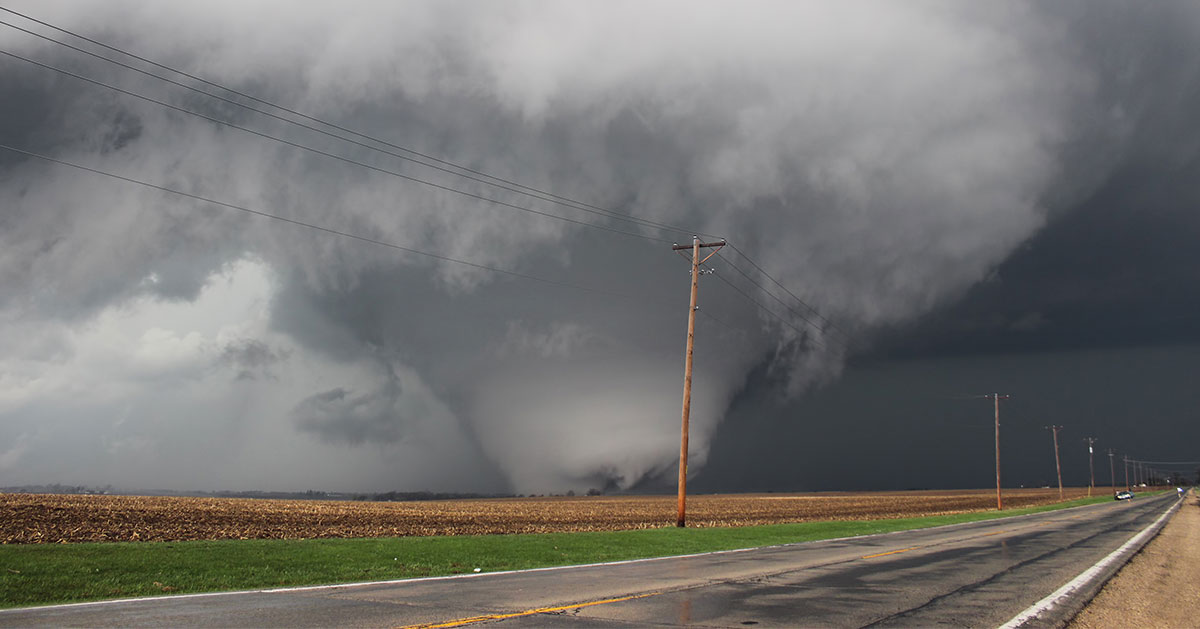

If you grew up in South Africa, the closest you got to a tornado was probably your washing line taking off in a summer storm, your dog panicking under the bed, and your neighbour screaming that the trampoline is on the roof again. But every now and then, the real thing touches down here. So let’s talk about how a tornado actually forms, why it happens, and what on earth is going on in the sky when nature decides to throw a tantrum.
And, yes, we’ll keep it simple. Because no one needs a physics lecture that feels like matric revision.
What a tornado actually is
A tornado is a fast, spinning column of air that stretches from a storm cloud to the ground. It looks like a giant vacuum cleaner sent from above to cause chaos. The scary part is that you often can’t see the full funnel at first. Dust and debris get pulled in and reveal its shape.
The basics:
- A storm builds.
- The wind changes direction.
- The air starts spinning.
- The rotation tightens.
- A funnel forms.
- If it reaches the ground, it becomes a tornado.
But let’s unpack that in a way that even your uncle at the braai will nod at wisely.
The three ingredients needed for a tornado to form
Every tornado begins with specific weather conditions. Think of it like a recipe. If one ingredient is missing, the storm will sulk and move on.
1. Warm, moist air near the ground
This is air that rises fast. It’s the same air that makes you sweaty on a hot Highveld afternoon and makes the clouds look heavy and moody.
Warm air rises. Cold air sinks. When warm, moist air pushes up into a storm system, it fuels the storm like petrol added to a fire.
2. Cold, dry air above
The second ingredient is colder, drier air higher up. When the warm and cold layers meet, things get unstable. And unstable weather is dramatic weather.
3. Wind that changes speed and direction
This is the big 1. Tornadoes love wind that does weird things. Wind near the ground blows 1 way. Wind higher up blows another way. Speeds increase with height.
When winds twist like this, they create horizontal spinning currents in the air. These horizontal rolls are the seeds of tornado formation.
If the storm tilts that horizontal spin upwards, you get rotation inside the storm. That rotating storm is called a supercell, which is the nursery for most tornadoes.
Step by step: How a tornado forms inside a storm
Now, let’s take the science and break it down into a simple path.
Step 1. Winds create horizontal rotation
Different wind speeds form rolling tubes of spinning air near the surface. It starts gentle, like a lazy roll of mist.
Step 2. Rising air tilts the rotation upright
A strong thunderstorm pulls this rolling tube upright. Suddenly, the rotation is vertical. Now the storm is spinning like a top.
Step 3. A mesocyclone forms
This is a fancy word for a rotating updraft inside the storm. Think of it as the heart of the spinning system.
Step 4. Rotation speeds up
As the storm narrows and stretches, the rotation increases. It works the same way as a figure skater spins faster when they pull their arms in.
Step 5. A funnel cloud develops
The pressure inside the rotating column drops. Moist air condenses. A funnel cloud appears below the storm.
At this stage, the funnel may not touch the ground. It just hangs there, looking ominous.
Step 6. The funnel touches the ground
If the funnel makes contact with the ground, dust gets pulled in. The tornado becomes visible and officially earns its title.
And then, depending on its strength, it can move through an area with winds strong enough to uproot trees, lift debris, dent roofs, and turn trampolines into flying saucers.
Why tornadoes form in some places more than others
If tornadoes were celebrities, the United States would be their Sandton. They love performing there. South Africa gets fewer tornadoes, but we do see them from time to time.
The question is, why do they favour certain regions?
- Geography plays a role: Flat land helps storms rotate more freely. Uneven terrain disrupts the airflow.
- Temperature layers matter: Places that have warm, moist air rising up into colder, drier air above are ideal tornado zones. This is common over central North America.
- Strong instability fuels the process: The more unstable the atmosphere, the more energy a storm has to work with. South Africa gets this in late summer, especially in the Highveld.
- Wind shear creates rotation: Any place with shifting wind patterns has the right setup for rotation. But you still need the right storm to tilt it into a vertical spin.
What causes a tornado to end
Nothing in nature spins forever. A tornado weakens when:
• The storm loses its fuel source.
• The rotation gets disrupted.
• Cooler air rushes in and chokes the updraft.
• The funnel can’t stay connected to the ground.
Once the storm collapses or moves on, the tornado fades.
Sometimes this happens fast. Sometimes it lasts long enough to leave a long path of damage.
Tornado myths South Africans love, but shouldn’t
Myth: A tornado can’t form in South Africa.
False. We’ve seen several, and we’ll see more. They are less common here, but they happen.
Myth: Opening windows reduces pressure and saves your home.
Please don’t do this. It does nothing useful and wastes time.
Myth: Tornadoes only happen in open fields.
They can hit suburbs, farms, industrial areas, and anywhere the storm directs them.
Myth: Tornadoes always look like perfect funnels.
Some look like ropes. Some look like wide cones. Some are wrapped in rain and hard to see.
How tornadoes can affect your insurance
Tornadoes fall under acts of nature. That includes storm damage, wind damage, and the chaos that can follow. With King Price, your buildings and home contents insurance covers damage caused by storms and wind, as long as the event is sudden and unforeseen.
Your structure is covered under building insurance. Your belongings are covered under home contents insurance. If a tornado decides to pick up your roof and introduce it to your neighbour’s garden, the king can step in, provided the cover is active, and the details are correct.
And if debris hits your car? Comprehensive car insurance also protects against damage from acts of nature.
Just remember the golden rule:
Correct details equal correct cover.
Why it helps to be insured for acts of nature
Storms can damage roofs, windows, walls, garages, outbuildings, and everything inside. Even a small tornado can send tiles flying and water flooding in. That is why having the king’s insurance makes a real difference.
• Buildings insurance protects the fixed structure.
• Home contents insurance protects what you own inside.
• Comprehensive car insurance protects your wheels.
If a tornado ever visits your area, you’ll sleep easier knowing you’re covered.
To learn more about buildings and home contents cover, or to review your current policy, you’re welcome to reach out to us. The king’s team is always ready to help.
Summary
Tornadoes form when warm air, cold air, and shifting winds combine inside a strong storm. Rotation builds. A funnel forms. If it reaches the ground, a tornado develops. South Africa sees fewer tornadoes than some countries, but they do occur, and understanding how they form helps you stay aware and safe.
And when storms cause real damage, the king is here to help put your world back together. That’s what royal service looks like.
FAQs about how a tornado is formed
1. Can a tornado form without a thunderstorm?
Most tornadoes form inside strong thunderstorms. Some rare versions form differently, but they’re far less common.
2. How long does a tornado last?
Anywhere from a few seconds to more than an hour. Most last less than 10 minutes.
3. What is the difference between a funnel cloud and a tornado?
A funnel cloud has not touched the ground. A tornado has.
4. Can tornadoes form at night?
Yes. They don’t keep business hours. Nighttime tornadoes are harder to spot.
5. Does climate change influence tornadoes?
Changes in temperature and storm patterns can shift where storms form. The research continues, but we do know that severe storms are becoming more unpredictable.
