
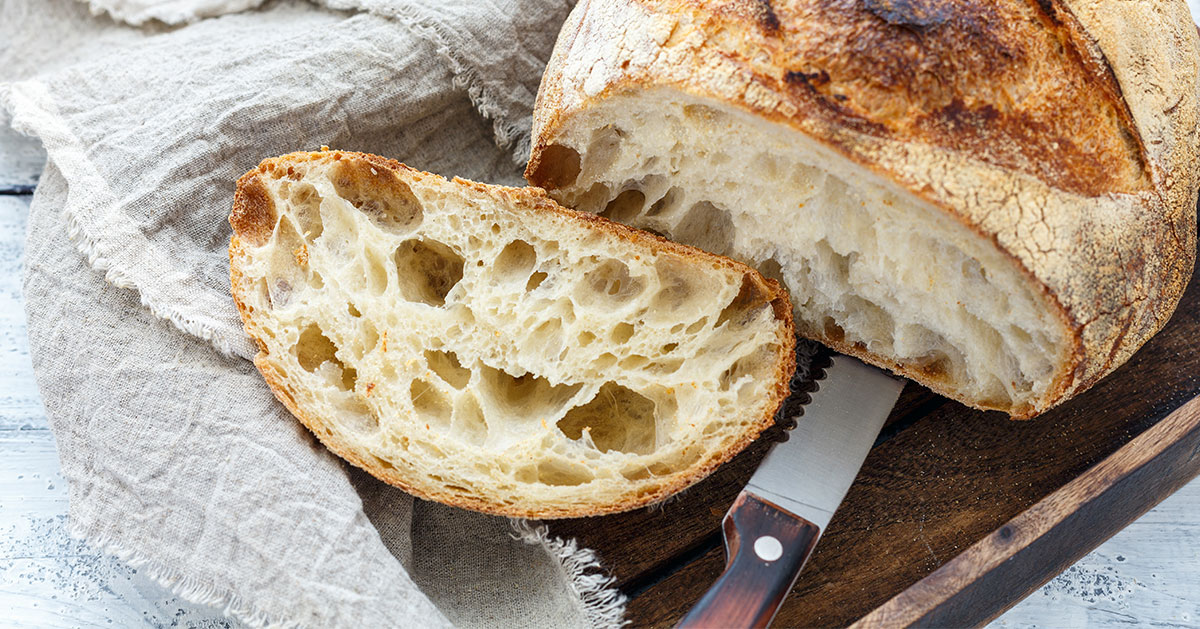

Let’s be honest: Most of us have a love-hate relationship with bread. We love the smell, the taste, the crunch… But not so much the bloat, cramps, or sluggishness that sometimes follows. If you’ve ever wondered why sourdough feels lighter on your tummy than your average shop-bought loaf, here’s the royal truth: It’s all in the science (and a bit of ancient wisdom).
The magic starts with fermentation
Sourdough isn’t made with commercial yeast. Instead, it uses a natural starter, a mix of wild yeast and lactic acid bacteria that’s left to ferment. This fermentation process gives sourdough its signature tang, but it also breaks down gluten and phytic acid, making it much easier to digest.
Commercial breads, on the other hand, are mass-produced with fast-rising baker’s yeast. This skips the long fermentation process, meaning your gut has to do all the hard work your bread maker didn’t bother with. No wonder your stomach feels like a rugby ball after 2 slices of white toast.
Easier to digest, naturally
The bacteria in sourdough pre-digest some of the starches and proteins before you even take a bite. That’s why people with mild gluten sensitivity often find sourdough easier on their gut. While it’s not gluten-free, the fermentation process reduces the levels of gluten and makes the remaining proteins less inflammatory.
Plus, sourdough contains prebiotics: Fibres that feed the good bacteria in your gut. Over time, this helps support a healthier microbiome, which is key to better digestion, stronger immunity, and even improved mood (yes, your gut really talks to your brain).
Lower glycaemic index = happier gut (and waistline)
Compared to commercial white bread, sourdough has a lower glycaemic index (GI). This means it causes a slower, steadier rise in blood sugar levels. The lactic acid produced during fermentation changes the structure of the carbs, making them digest more gradually.
That’s good news for your energy, metabolism, and those trying to avoid the dreaded mid-afternoon crash. In simpler terms, sourdough keeps you fuller for longer and helps your gut process food more efficiently.
A natural probiotic powerhouse
While most probiotics are associated with yoghurt or kombucha, sourdough has its own beneficial bacteria. These friendly microbes (mainly Lactobacillus species) can help balance your gut flora and promote healthy digestion. Even though baking kills most live cultures, the acids they produce remain in the bread, and that’s where the magic happens.
These acids help create a more favourable environment in your gut by keeping harmful bacteria in check and encouraging your good bacteria to thrive.
No weird additives or preservatives
Many commercial loaves are packed with preservatives, dough conditioners, and stabilisers to keep them looking fluffy and fresh for days (or weeks). These additives can irritate your gut and disrupt your microbiome over time.
Sourdough, by contrast, is refreshingly simple. Flour, water, salt, and a starter. That’s it. No mystery ingredients, no stabilisers, and no bloating side effects. Your gut will thank you for keeping it natural.
The flavour test
Beyond gut health, sourdough just tastes better. The slow fermentation creates a rich, complex flavour you’ll never get from a commercial loaf. It’s the difference between a freshly brewed cappuccino and instant coffee…It’s still coffee, but not really.
If you’re looking for a way to care for your gut without cutting out bread entirely, switching to sourdough is an easy and delicious win.
A royal reminder
Taking care of your gut is like looking after your car; what you put in matters. Just like you wouldn’t fuel your bakkie with cheap petrol, your body deserves the good stuff too. And speaking of keeping things running smoothly… Have you insured your ride yet?
At King Price, we believe in keeping things simple, fair, and easy to digest, just like sourdough. Our comprehensive car insurance premiums start off low and decrease monthly as your car loses value. Because paying less every month just makes sense.
Get a quote by clicking here or send a WhatsApp to 0860 50 50 and save more than just your gut from discomfort.
Your problem = no problem, when you’re with the king
FAQs
1. Is sourdough bread gluten-free?
No, but it contains less gluten and is often easier to digest than commercial breads because fermentation breaks down some of the gluten proteins.
2. Can sourdough help with bloating?
Yes, many people find that sourdough causes less bloating thanks to its natural fermentation process and reduced levels of difficult-to-digest compounds.
3. Do all sourdoughs have probiotics?
Most of the live bacteria are destroyed during baking, but their by-products (like organic acids) remain and still benefit your gut.
4. Is store-bought sourdough the same as homemade?
Not always. Some commercial “sourdoughs” are made with regular yeast and sour flavouring, so always check that it’s made with a real starter.
5. Can I eat sourdough every day?
Absolutely, as part of a balanced diet. Just remember portion control and choose wholegrain sourdoughs when possible for added fibre.
