
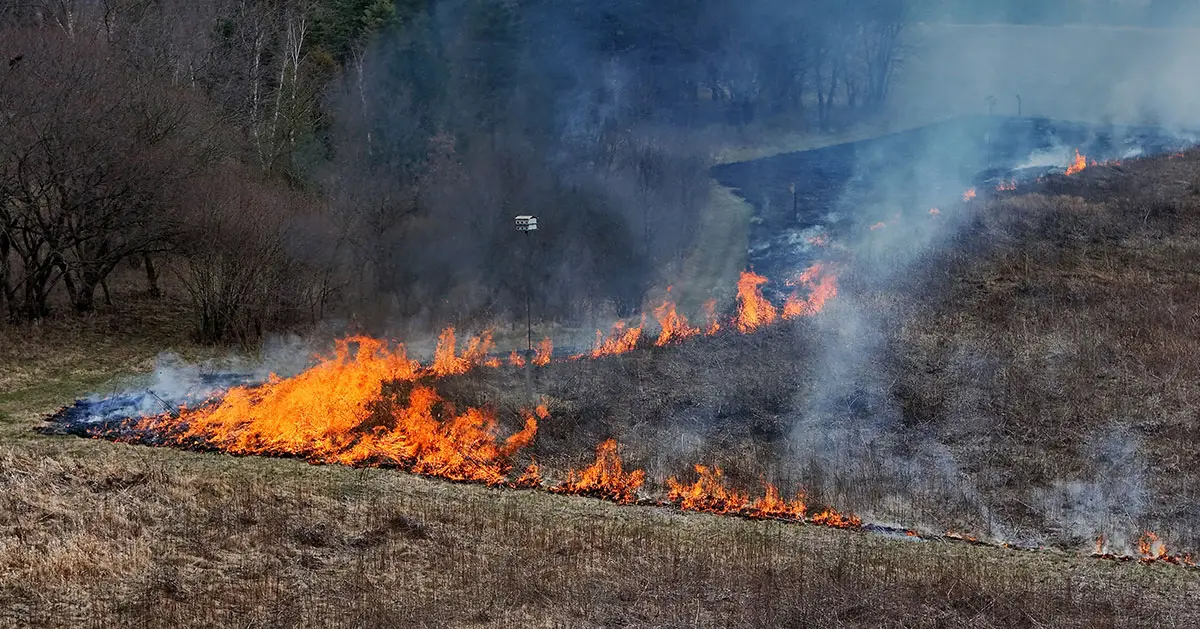

Farmers, as you well know, it’s always fire season somewhere in South Africa. Whether it’s a summer veld fire racing across the Karoo, a winter blaze in the Western Cape, or a crop fire threatening your harvest in the Free State, fire is one of the most unpredictable and destructive risks you face. The good news: the right preparation and the right agri insurance cover can make all the difference between a setback and a catastrophe.
Key takeaways
- Fire season in South Africa runs year-round, with different regions facing peak risk at different times.
- Practical prevention, firebreaks, early-warning systems, and trained staff, is your most important first line of defence.
- King Price agri insurance is designed to help farmers manage the financial fallout when fires do occur.
- Understanding exactly what your policy covers before a fire breaks out is critical, not after.
- Downloading our bilingual fire risk guides gives you a practical, farm-specific framework to work from.
Why fire risk never really stops for South African farmers
South Africa’s climate means there’s no single “fire season”, it shifts by region and by year. The Western Cape faces its highest risk in the hot, dry summer months. Gauteng, KwaZulu-Natal, and Limpopo see peak danger in the dry winter months when grasses are tinder-dry. The Eastern Cape and Free State can experience fires across multiple seasons depending on rainfall patterns.
For farmers, this means fire risk management isn’t a once-a-year checklist. It’s an ongoing discipline, one that protects your land, your structures, your livestock, your equipment, and ultimately your livelihood.
- Veld fire
- An uncontrolled fire that burns through natural vegetation such as grasslands, shrublands, or bushveld. Veld fires are a leading cause of agricultural losses in South Africa.
The legal framework: what the law says about firebreaks
South African law places clear obligations on landowners when it comes to fire prevention. The Veld and Forest Fire Act 101 of 1998 requires landowners in designated fire management areas to maintain firebreaks on their boundaries. Failure to comply can affect your legal standing, and potentially your insurance claim, if a fire spreads from your property.
The Veld and Forest Fire Act 101 of 1998 requires South African landowners in designated fire management areas to establish and maintain firebreaks on their properties.
Membership of a Fire Protection Association (FPA) in your district is strongly recommended. FPAs coordinate firebreak management, share early-warning information, and provide access to firefighting resources, all of which can reduce both the risk of fire and the severity of losses when fires do occur.
- Fire Protection Association (FPA)
- A statutory body established under the Veld and Forest Fire Act to coordinate fire prevention, firefighting, and fire risk management among landowners in a defined area.
Practical fire risk management steps for farmers
No insurance policy replaces good preparation. Here are the fire risk management practices that every South African farmer should have in place before the dry season hits.
What King Price agri insurance covers when fire strikes
King Price agri insurance is built for the realities of farming in South Africa, including the ever-present risk of fire. While the specifics of your cover depend on your individual policy, agri insurance can typically include protection for the following when fire is the cause of loss:
- Farm structures, homesteads, barns, storage facilities, and outbuildings
- Agricultural equipment and machinery, tractors, harvesters, irrigation systems, and implements
- Crops, standing crops and harvested produce in storage
- Livestock, animals lost or injured as a result of fire
- Fencing, boundary and internal fencing damaged or destroyed by fire
The most important thing you can do is read your policy wording carefully and speak to your King Price broker or adviser to confirm exactly what’s covered, what the limits are, and what you need to do at claim stage. Knowing this before a fire, not after, is what separates a smooth claim from a painful one.
King Price offers agri insurance products designed for South African farmers, covering risks including fire damage to farm structures, equipment, and other agricultural assets.
Agri insurance cover types: what’s the difference?
Not all agri insurance policies are structured the same way. Here’s a quick comparison of the main cover approaches so you can have an informed conversation with your adviser.
| Cover type | What it typically covers | Best suited for |
|---|---|---|
| Named perils | Only the specific risks listed in the policy (e.g. fire, lightning, flood) | Farmers wanting targeted, lower-cost cover for defined risks |
| All-risk (comprehensive) | All causes of loss except those specifically excluded | Farmers wanting broad protection with fewer gaps |
| Crop-specific insurance | Yield losses or damage to a specific crop, often linked to weather events | Commercial crop producers with high-value harvests |
| Multi-peril agri cover | Combines structure, equipment, livestock, and crop cover in one policy | Mixed farming operations with diverse assets and risks |
- Named perils
- An insurance policy structure that only covers losses caused by the specific risks (perils) listed in the policy document. If a cause of loss is not named, it is not covered.
The Working on Fire programme: a national resource for farmers
South Africa’s Working on Fire programme, run under the Department of Forestry, Fisheries and the Environment, deploys aerial and ground-based firefighting resources across the country during high-risk periods. Farmers in areas served by the programme can benefit from faster response times when a large fire breaks out.
The Working on Fire programme deploys aerial and ground-based firefighting resources across South Africa to combat veld and forest fires, supporting farmers and rural communities.
Fire is not a matter of if, it's a matter of when. The farms that survive fire season with the least damage are the ones where the farmer has done the preparation work in the months before the fire arrives.
What the data tells us about agricultural fire losses
Fire-related agricultural losses in South Africa are significant and consistent. Understanding the scale of the risk helps farmers and insurers alike make better decisions about cover levels and prevention investment.
Agricultural disaster risk and fire losses in South Africa
Veld and agricultural fires are consistently among the top three causes of declared agricultural disasters in South Africa, with losses running into hundreds of millions of rands annually across crops, livestock, and infrastructure.
Download our fire risk guides
We’ve put together practical fire risk guides specifically for South African farmers, available in English and Afrikaans. Download yours below and share it with your farm manager and team.
Get a King Price agri insurance quote
Your farm is your kingdom, and the king protects what’s his. Don’t wait until fire season is already at your gate. Get a King Price agri insurance quote today and make sure your cover is fit for purpose before the flames arrive.
Get a quote from King Price agri insurance
Last reviewed:
Frequently asked questions
Update history (1)
- Expanded article with full fire risk management framework, legal context, agri insurance cover comparison, Working on Fire programme reference, bilingual download links, FAQ, and structured data for SEO, GEO, and AIO.
