
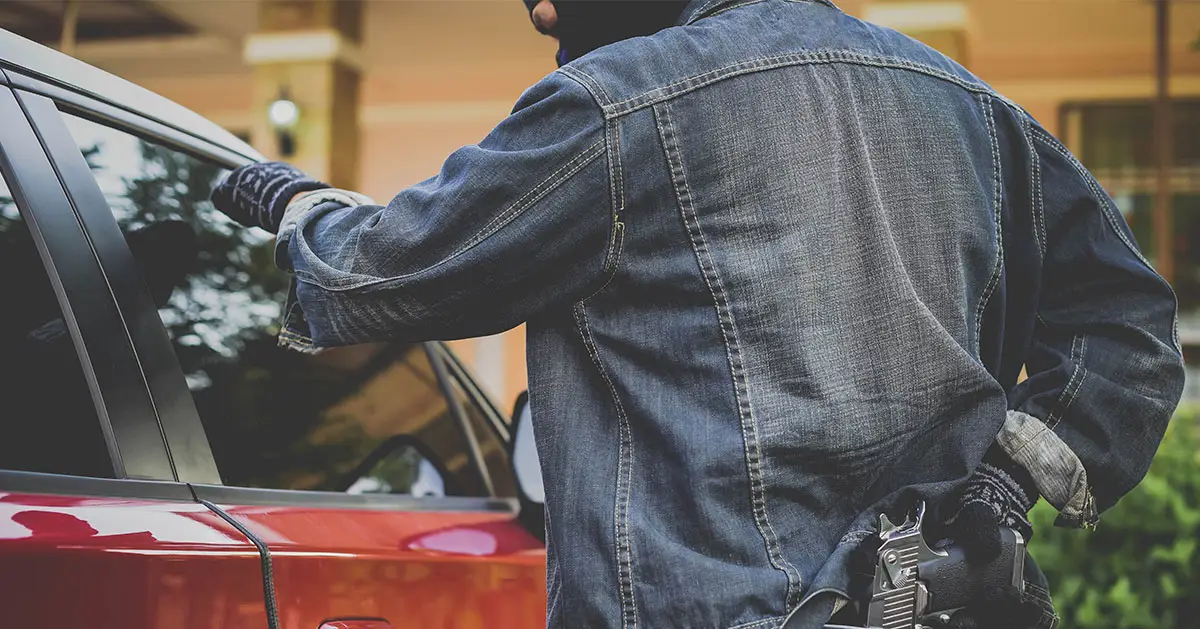

South Africa has one of the highest vehicle hijacking rates in the world, and the trend is moving in the wrong direction. Every day, South African drivers face the terrifying reality of someone demanding their keys at gunpoint or knifepoint. The good news? Most hijackings are preventable, and understanding where, when, and how they happen puts you in a far stronger position to protect yourself and your family.
Key takeaways
- Hijacking in South Africa is increasing, with Gauteng recording the highest number of incidents
- Driveways are the single most common hijacking location, slow down and stay alert before entering yours
- Traffic lights, parking areas, and quiet roads are the next most targeted spots
- Never resist a hijacker, hand over your keys calmly and prioritise getting yourself and passengers to safety
- Comprehensive car insurance that includes hijacking cover means you won't lose everything if the worst happens
How bad is hijacking in South Africa right now?
The South African Police Service releases crime statistics every quarter, and the hijacking numbers make for uncomfortable reading. Vehicle hijacking has been climbing steadily, with tens of thousands of incidents recorded each year across the country.
Gauteng is the hardest-hit province by a significant margin, followed by the Western Cape and KwaZulu-Natal. Within Gauteng, Johannesburg and its surrounding suburbs consistently top the provincial list. But hijacking is not a Gauteng-only problem, drivers in every province need to be aware.
Gauteng consistently records the highest number of vehicle hijackings of any South African province, according to SAPS quarterly crime statistics.
Where do most hijackings happen?
Knowing the most common hijacking locations is the first step to avoiding them, or at least approaching them with extra caution.
- Hijacking hotspot
- A location where vehicle hijackings occur at a statistically higher rate than surrounding areas, often identified through SAPS crime mapping and neighbourhood watch data.
- Your own driveway, the most common location. Hijackers follow you home and strike as you slow down to open your gate or garage.
- Traffic lights (robots), especially late at night or early in the morning when roads are quiet and you’re a stationary target.
- Parking areas, shopping centres, office parks, and petrol stations where you’re distracted and your guard is down.
- Quiet residential roads, particularly near schools, churches, or community halls where predictable stopping patterns make you easy to follow.
- Off-ramps and highway merge points, where traffic slows and you’re temporarily boxed in.
What time of day are hijackings most common?
Hijackings happen at all hours, but there are two peaks: the morning rush (06:00 to 09:00) and the evening commute (17:00 to 20:00). These windows align with predictable driver behaviour, the same routes, the same times, the same stops. Hijackers rely on that predictability. Varying your route and your timing, where possible, disrupts their planning.
Warning signs that a hijacking may be about to happen
Hijackers often follow their targets before striking. Recognising the warning signs early gives you time to react safely.
- A vehicle that has been following you for several turns or a long distance
- Someone loitering near your driveway gate or garage entrance when you arrive home
- A car that blocks your path or bumps you from behind (the so-called “bump and rob”)
- Someone approaching your window at a traffic light, especially if they seem agitated or are signalling urgently
- Unusual activity near your parked car when you return to it
If something feels wrong, it probably is. Trust your instincts. Drive to the nearest police station, petrol station, or busy public place rather than stopping.
Criminals are opportunistic. They look for distracted, predictable drivers who make their job easy. The moment you become aware of your surroundings and change your behaviour, you become a harder target.
What to do during a hijacking
If you are hijacked, your only priority is getting yourself and your passengers out safely. Your car can be replaced. You cannot.
Hijacking prevention tips every South African driver needs
Prevention is always better than having to use your insurance claim. These habits significantly reduce your risk.
At your driveway
- Open your gate before you leave so it is already open when you return, or use a remote that opens it from a distance while you are still moving.
- Install good lighting and a security camera at your entrance.
- Check your mirrors and surroundings before turning into your street.
- If you notice anything suspicious, do not stop, drive around the block and call for help.
At traffic lights
- Keep a gap of at least one car length in front of you so you can pull away quickly if needed.
- Keep doors locked and windows up at all times.
- Stay alert, put your phone away and keep your eyes moving.
- Approach robots slowly so you arrive on green rather than sitting stationary on red.
In parking areas
- Park in well-lit, busy areas close to entrances.
- Have your keys ready before you walk to your car, don’t stand next to your car rummaging in your bag.
- Check the back seat before you get in.
- Lock the doors immediately once you are inside.
Keeping at least one car length of space at traffic lights gives drivers a critical escape route if a threat is identified, according to South African defensive driving experts.
Technology that helps protect your vehicle
No device stops a determined hijacker in the moment, but tracking and immobilisation technology significantly improves your chances of recovering your vehicle afterwards, and can deter opportunistic criminals who know the car is traceable.
- GPS tracking, a live tracking device lets your tracker company and SAPS locate your vehicle quickly after a hijacking.
- Immobilisers, a hidden secondary immobiliser that the hijacker doesn’t know about can stop the vehicle once they try to move it.
- Panic buttons, a wearable or in-car panic button that silently alerts your security company.
- Dashcams, footage aids police investigations and can support your insurance claim.
Comprehensive vs third party cover: what actually covers hijacking?
Not all car insurance covers hijacking. Understanding the difference between cover types is essential, especially given how common hijacking is in South Africa.
| Cover type | Hijacking covered? | Theft covered? | Own damage covered? |
|---|---|---|---|
| Third party only | No | No | No |
| Third party, fire and theft | No | Yes (theft, not hijacking) | No |
| Comprehensive | Yes | Yes | Yes |
Third party only and third party, fire and theft cover do not pay out for hijacking. Only comprehensive car insurance covers you when your vehicle is taken by force. If you are financing your car, your bank almost certainly requires comprehensive cover, but even if your car is paid off, the cost of replacing it without insurance is a risk most South Africans simply cannot afford to take.
- Comprehensive car insurance
- A policy that covers damage to your own vehicle as well as damage or injury you cause to third parties. It typically includes cover for theft, hijacking, fire, weather damage, and accidents.
Comprehensive car insurance is the only standard cover type in South Africa that includes hijacking as a covered event, third party and third party fire and theft policies do not cover hijacking.
How King Price covers you for hijacking
King Price comprehensive car insurance includes hijacking cover as standard. If your vehicle is hijacked, you can claim for the loss of your vehicle under your comprehensive policy, subject to your chosen excess and the terms of your policy.
There’s something else worth knowing about King Price: your premium decreases every month as your car depreciates in value. You’re not paying for cover you don’t need. The king believes in fair premiums, and that means your monthly payment should reflect what your car is actually worth right now, not what it was worth when you bought it.
King Price monthly decreasing premium model
King Price is the only major South African insurer to automatically decrease car insurance premiums every month in line with the vehicle's depreciating value, meaning clients pay less over time without having to renegotiate their policy.
To get a quote for comprehensive car insurance that includes hijacking cover, visit insurance.kingprice.co.za or get an online quote in minutes.
Last reviewed:
Frequently asked questions
Update history (1)
- Fully restructured and rewritten for SEO, AEO, GEO, and AIO. Added TL;DR Answer Box, Key Takeaways, How-To steps, Comparison Table, Stat Callout, Citation Capsules, Expert Quote, Glossary Terms, Research Data, Reviewed By, and Yoast FAQ blocks. Updated hijacking statistics references and prevention guidance to reflect current SAPS data.
Don’t let a hijacking leave you without a car and without a plan. Get a King Price comprehensive car insurance quote today, or grab an online quote in minutes. The king’s got your back, even when the roads don’t.
