
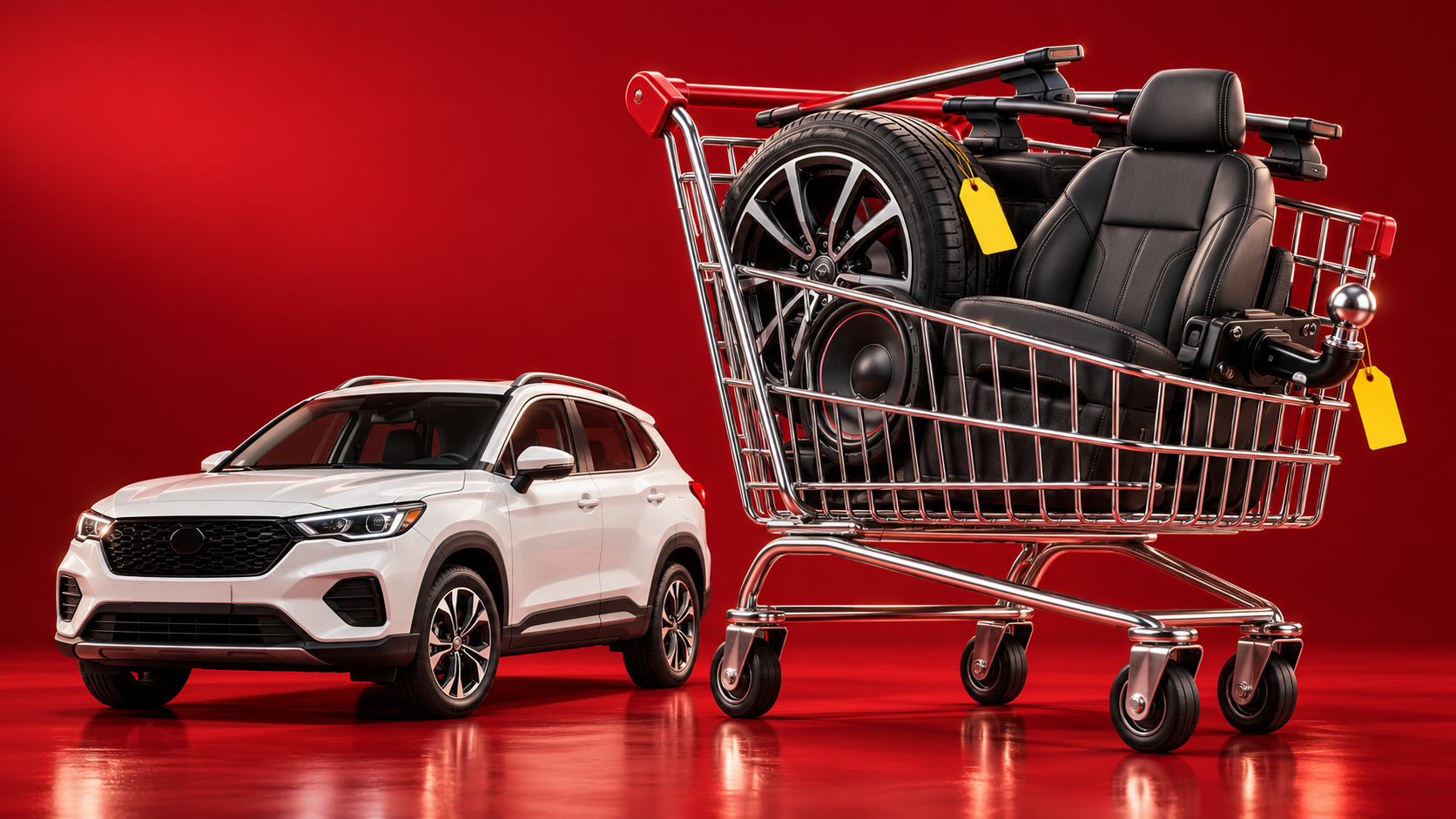

That shiny set of mags, canopy or towbar can add serious value to your vehicle. But there’s a catch: If an accessory isn’t standard or factory-fitted, it needs to be listed separately on your policy and insured for the correct replacement value. This car accessories value guide gives you useful indicative figures to help you check yours.
| Quick answer • Your car’s insured value includes the car and its standard, factory-fitted accessories. • Non-standard or added accessories must be listed separately on your policy and insured for their correct replacement value. • Indicative values in this guide range from R5,000 for smash-and-grab protection to R75,000 for a passenger car or SUV body kit. • Bakkie accessories can add up quickly too. The guide puts a canopy at R65,000 and paint protection film at R70,000. • These figures are guides, not final valuations. Check what your accessories would actually cost to replace. |
What is a car accessories value guide?
A car accessories value guide gives you indicative replacement values for extras fitted to your vehicle. It can help you spot accessories that may need to be listed separately on your insurance policy and check whether their insured values still make sense.
The key word is ‘guide’. The values in these tables aren’t final valuations. Your actual accessory may cost more or less to replace depending on the product, brand, specification, installation and current price.
What counts as a non-standard accessory?
Your car’s insured value covers the vehicle and its standard, factory-fitted accessories. Additional extras that aren’t standard or factory-fitted need to be specified and insured separately for them to have cover.
That distinction matters.
A vehicle may start with one specification and become quite different after a few visits to accessory shops. New rims, a towbar, roof racks, upgraded leather seats and PPF can represent a sizeable amount of money.
How does insuring car accessories work?
The process starts with knowing what came standard with your vehicle and what was added afterwards.
- List your accessories. Note every non-standard or added extra fitted to your vehicle.
- Check current replacement costs. Use the values in the tables as a starting point, then check the actual replacement value of your particular accessory.
- Tell your insurer about non-standard extras. These need to be specified separately on your policy.
- Check your policy schedule. Make sure the accessory and its details appear correctly.
- Review values when they change. You can increase or decrease the insured value of accessories later if their value changes.
Passenger car and SUV accessories value guide
This table provides indicative values for passenger cars and SUVs. These are a handy starting point rather than final valuations.
| Accessory | Guide value |
| Reverse camera | R5,000 |
| Sound system | R35,000 |
| Mags or rims | R25,000 |
| Body kit | R75,000 |
| Sunroof | R25,000 |
| Towbar | R18,000 |
| Roof racks | R8,000 |
| Air suspension | R50,000 |
| Smash-and-grab | R5,000 |
| Awning | R12,000 |
| Park distance control (PDC) | R12,000 |
| Paint protection film (PPF) | R60,000 |
| Leather seats | R40,000 |
There’s quite a spread. That’s why guessing the total value of your extras isn’t a great plan. Several upgrades on one vehicle can add up to a sizeable replacement bill.
Bakkie accessories value guide
Bakkies tend to collect accessories faster than a braai collects opinions. Whether yours is set up for work, weekends away or a bit of both, make sure you know what you’ve added. Here are the indicative bakkie accessory values.
| Accessory | Guide value |
| Cattle rails | R18,000 |
| Winch | R25,000 |
| Roll bar | R10,000 |
| Spotlights | R10,000 |
| Roof racks | R10,000 |
| Tonneau cover | R15,000 |
| Side steps | R8,000 |
| Rubberising | R6,000 |
| Canopy | R65,000 |
| Bull bar or nudge bar | R30,000 |
| Snorkel | R8,000 |
| Smash-and-grab | R5,000 |
| Park distance control (PDC) | R12,000 |
| Paint protection film (PPF) | R70,000 |
| Leather seats | R45,000 |
A few extras can quickly become a big number. Using the values in the table, a canopy, bull bar and winch alone come to R120,000.
That isn’t a valuation of your particular setup. It simply shows why keeping accessory details up to date matters.
How do passenger car and bakkie accessory values compare?
Some accessories appear in both tables, but their indicative values aren’t always identical.
| Accessory | Passenger car or SUV | Bakkie |
| Roof racks | R8,000 | R10,000 |
| Smash-and-grab | R5,000 | R5,000 |
| Park distance control (PDC) | R12,000 | R12,000 |
| Paint protection film (PPF) | R60,000 | R70,000 |
| Leather seats | R40,000 | R45,000 |
This is another reason to treat the tables as a starting point. The actual replacement value of an accessory depends on the item fitted to your particular vehicle.
What are the benefits and risks of specifying your accessories?
Benefits
- Your policy reflects the extras actually fitted to your vehicle.
- You have a clear record of their replacement values.
- You can review those values when circumstances change.
- Your policy schedule gives you a useful place to check what’s been specified.
Risks of getting the details wrong
- You may assume an added accessory forms part of the car’s standard insured value when it doesn’t.
- An accessory’s listed value may no longer reflect its replacement cost.
- You may forget to update the policy after modifying the vehicle.
- Incorrect policy information can affect cover or a claim.
Common mistakes people make with car accessories
Assuming every fitted item is automatically included
Something being bolted, glued or wired to your car doesn’t automatically make it a standard accessory. Find out whether it was part of the standard factory specification.
Using the purchase price forever
Replacement values can change. What you paid isn’t necessarily what the same item would cost to replace now.
Forgetting modifications made after taking out insurance
A new towbar on Saturday may be useful for next weekend’s trip, but don’t forget the insurance admin.
Adding several extras without considering their combined value
One upgrade might look small in isolation, but several can represent thousands of rands.
Treating guide values as guaranteed valuations
The values supplied in the tables above are expressly described as a guide. They aren’t final valuations.
Tips for keeping your car accessories correctly listed
- Keep invoices for accessories and installation work.
- Photograph major accessories after they’re fitted.
- Check current replacement costs rather than relying only on what you originally paid.
- Review your policy schedule after making a change.
- Tell your insurer when you add or remove a non-standard accessory.
- Review accessory values periodically.
- Ask your insurer if you’re unsure whether an item needs to be specified.
Car accessories insurance checklist
Before you close this tab and admire those mags again, run through this list:
- List every added or non-standard accessory.
- Separate standard factory-fitted equipment from later additions.
- Find the current replacement value of each added accessory.
- Keep supporting invoices or valuation information.
- Tell your insurer about the relevant changes.
- Check that specified accessories appear correctly on your policy schedule.
- Review their values again when prices or equipment change.
- Contact your insurer if you’re uncertain about an accessory.
When should you review your car accessory values?
Review them whenever you make a material change to the vehicle. That could be after fitting new rims, upgrading a sound system, adding a canopy, installing PPF or swapping an old accessory for a newer one. Your policy should describe the car that’s actually sitting in your driveway, not the version you bought three upgrades ago.
It’s also sensible to review the values periodically even when the accessories haven’t changed.
Real world example
Say you own a bakkie and have fitted a canopy, bull bar, winch and side steps. Using the values in the table purely as an indicative guide:
- Canopy: R65,000
- Bull bar or nudge bar: R30,000
- Winch: R25,000
- Side steps: R8,000
- Indicative combined value: R128,000
That’s R128,000 in added equipment using the guide figures. Your actual accessories could have different replacement values, so you would still need to check the correct figures for your particular equipment.
Frequently asked questions
How do I know what my car accessories are worth?
Start with the indicative figures in the tables in this guide, then check the replacement value of the actual item fitted to your vehicle. Brand, model, specification and installation can affect what replacement costs.
What happens if I add a new accessory after taking out insurance?
Tell your insurer about changes that could affect your cover. Once a policy change has been made, check the updated schedule to make sure the information is correct.
How much is a bakkie canopy worth?
R65,000 according to the table in this guide. That’s an indicative figure, not a final valuation of every canopy. Check the current replacement cost of the specific canopy fitted to your bakkie.
How much should I insure paint protection film for?
The table in this guide gives an indicative PPF value of R60,000 for passenger cars and SUVs and R70,000 for bakkies. Your actual replacement value may differ, so use the figure as a prompt to check your specific installation.
Can I change the insured value of my accessories later?
Yes. You can increase or decrease the insured value of accessories later if their value changes. Make sure any changes are correctly reflected on your policy schedule.
Summary
- A car’s insured value includes its standard, factory-fitted accessories.
- Added extras that aren’t standard or factory-fitted need to be specified and insured separately.
- This guide gives indicative values for common passenger car, SUV and bakkie accessories.
- Guide values aren’t final valuations. Check the replacement value of your actual equipment.
- When you change your car, update your insurance details too.
| Disclaimer: This article is for general information only and does not constitute financial or insurance advice. Insurance products, premiums, and benefits are subject to underwriting and individual circumstances. Always consult your policy documents or speak to an insurance consultant for advice specific to your situation. |
